Friday, 25 October 2013

AS Media Perliminary Task- Juno


Reflection:

What Went Well:

We managed to complete the entire shot list that we had to do. This helped us film because then we knew what we was doing when it came to filming each shot. We managed to complete all the filming and editing within the time given.


To Improve:

Some of our shots weren't completely right because we didn't have time to go back and re-film those shots, next time I would of like to re-film the shots we didnt like or wasnt the best quality.
Our shot list wasn't very accurate which meant when it came to filming day, we only got the list of what each shot was.
 Another main problem was that we couldn't film it all in one day which meant that each day we filmed ou actors and actresses was wearing different clothes, this was annoying because it didn't match at the end when it was all editied together it looked weird because each shot the actor had different clothes. As a result of this for our proper film opening I would want the characters to wear the same clothes the whole way though so it doesn't look unorganised and miss-matched.
 Filming the lower parts of the body was hard because, it was so low down us filming couldn't track with the actors. If on my proper film opening we had to film the feet then I would suggest that maybe we could use a skateboard to sit on because then it would be easier to go along with the actor and the recording wont be shakey or unfocused.To improve I think we should of used a tri-pod because then on some of the shots it wouldn't be as shakey, then we would have something to rest the camera to make the shot smooth
Also filming the high angles were hard because we couldn't find a place where we could do it properly and it would look right, but because we were at school we had to use our imagination to find places where we could film which was hard. Next time we would have to prepare for these shots and oraganise where we would film them.
Editing came with a few problems: We found that we couldn't get the timings right, so if we could re-do it again then I would of liked to get the timings right because then we would be close enough to the opening scene of Juno. Another problem when editing was putting the title “JUNO”in. It wasn't the same as the one from the film as the font is different but we found the closest we could. Also with editing getting the trasistions right betweeen shots, not all of ours are correct in our video but, we tried to get the closests we could with these aswell. .

Tuesday, 22 October 2013

Preliminary Task Storyboard

Preliminary Task Opening Sequence

Evaluation-

When reflecting on our preliminary task we looked at what could be improved, developed and also the making of it.

Firstly we found that it was filmed in a very dark area, which we initially wanted to signify the genre of the opening sequence. Although we found that this hindered our preliminary task as being so dark caused the quality to decrease and the film opening to appear much less professional. Due to this we found that lighting is very important and learnt that when filming our final film opening to ensure that we steered clear of dark areas but if we did need so we would make sure that the quality was up to standard we wanted to achieve. We found that we could do this by having more lighting that we originally used and by taking our time and re-filming any scenes that wasn't to the top quality.

Secondly, the speech within the film was also of a bad quality. We found that it was unclear for the audience to use. If filming with speech again we have learnt to now use a voice over technique to ensure that the sound is perfectly clear and heard by any audience.


Monday, 21 October 2013

Preliminary Task

Low Budget and High Budget With Feeback Added

Teacher Assesment

www: Excellent detail shown here, clearly considering the differences between the two.


EBI: Look carefully at the different companies - Paramount was the DISTRIBUTOR for the film, NOT the production company. Therefore, would help to get the film onto the market, but did not actually make the film. The distributor was Blumhouse Productions and Solana Films. Be careful when doing research like this, as the differences are huge!

NSE


Acted on Feedback-
Changed the titles on the low budget and high budget powerpoint

The Male Gaze


'The Male Gaze'  

Laura Mulvey 1975 (visual pleasure and narrative cinema)


The male gaze is a theory that is viewing from a hetrosexual males point of view, it says that there are 4 ways that the audience view media:
  • How men look at women
  • How women look at themselves
  • How women look at other women

  • Relegate women to objects - sexual objects

Laura Mulvey coined the term 'male gaze' in 1975, she believes that in film audiences have to view characters from the perspective of a hetrosexual male.

Features of 'the male gaze':
  1. The camera lingers on the curves of the females body, events occur to women are presented largely in the context of a mans reaction to these events.
  2. Relegates women to the status of objects, the female viewer must experience the narrative secondarily, by identification which the male.

Use of 'the male gaze'
  • Some theorist also have noted the sexualising of the female body even in situation where female sexiness is nothing to do with the product being advertised

Categorising Facial Expressions:
Women:
  • Chocolate box
  • Inviting 
  • Super- Smiler
  • Romantic
Men:
  • Care-free
  • Practical 
  • Seductive
  • Comic
  • Catologue

Johnathan Schroeder (1988)
 The gaze implies more than to look at - it signifies psychological relationship of power, in which the gazer is superior to the object of the gaze.

Teacher Assesment

WWW: You identified the basic aspects of the poster and started to make comments about genre.
EBI: if you identified a wider variety of features and linked them into more specifics about genre, using more terminology.

Effort: S

NSE

Friday, 11 October 2013

Todorov Theory Example

Todorov's theory states that films have an order/structure of narrative.
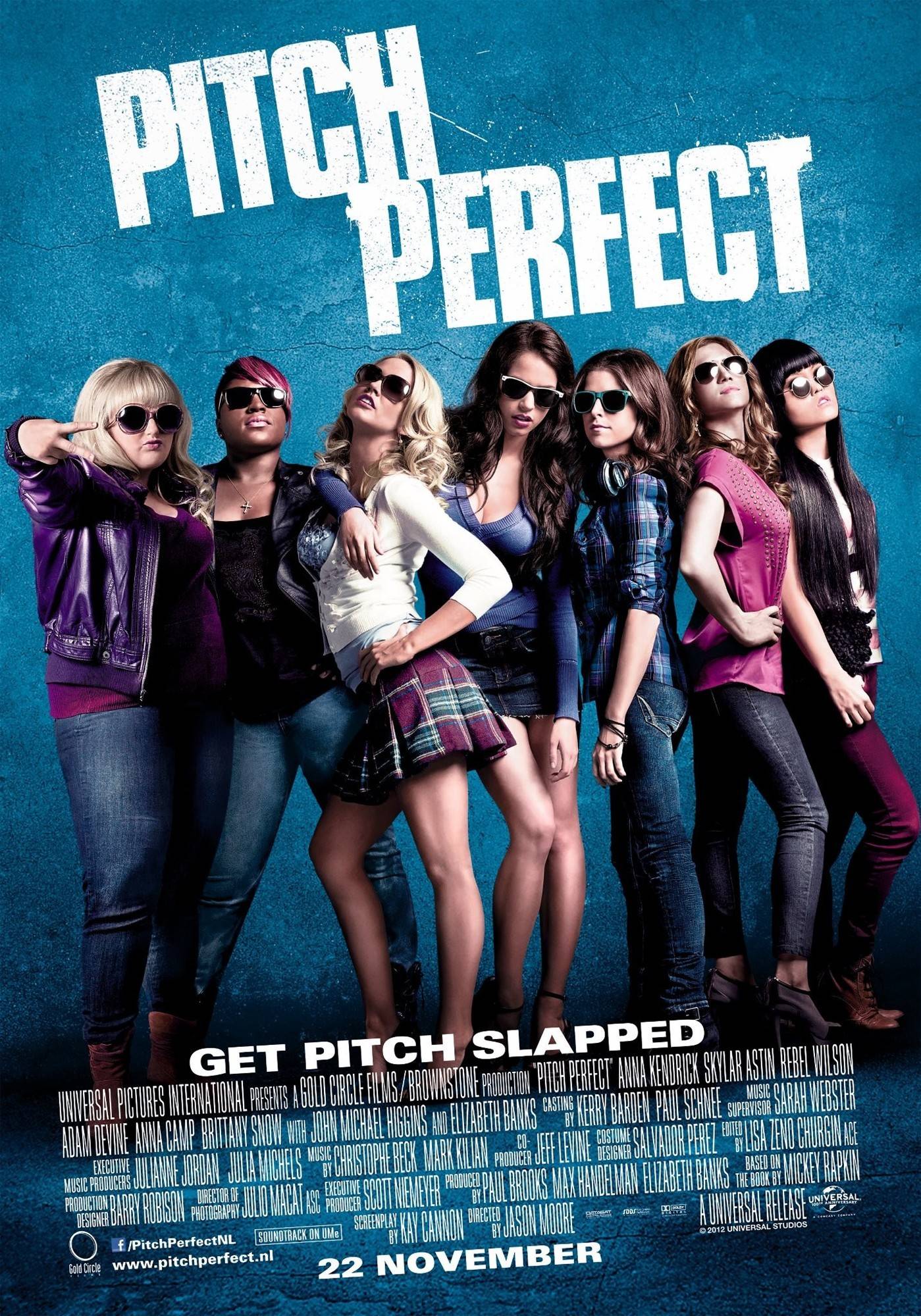
For example within Pitch Perfect:

  • Equilibrum (All as it should be) - Is Anna going to university to study philosophy where her dad is a techer at the school.  
  • Disruption of the Equilibrium - Her Dad will remove her from the school if she doesn't join any clubs.
  • Recognition - Is Anna joining the music group  'Bellas' which has got a low status in school and no-one wants to join it.
  • Attempt to repair the disruption - To compete in the compitition to win Nationals.
  • New Equilibrium - They win Nationals and they have a high status in the school.

Reception Theory


Reception Theory

 Reception Theory (Stuart Hall 1990) -Audience Repsonse  

Reception thoery states that the media is encoded by the producer- filled with values and messages However, this is then decoded by the spectators and often in different ways from the way the producer intended them too. Stuart Hall identified 3 types of audience decoding:

Dominant or Preferred:
How the producer wants the audience to view the media e.g watching a political speech and agreeing with it.
Oppositional:
When the audience rejects the preferred reading and creates their own meaning for the text e.g total rejection of a political speech.

Negotiated:
A compromise between the oppostional and dominant readings, where the audience accepts parts of the proucer's views but keeps a few of their own views too e.g neither disagreeing or agreeing on a debate or being disinterested.
Lots of factors could influence what reading we take:
  • Life experience
  • Mood at the time of viewing
  • Age
  • Culture
  • Beliefs
  • Gender